

Adala for All association supports the International Criminal Court's efforts to end impunity in Libya
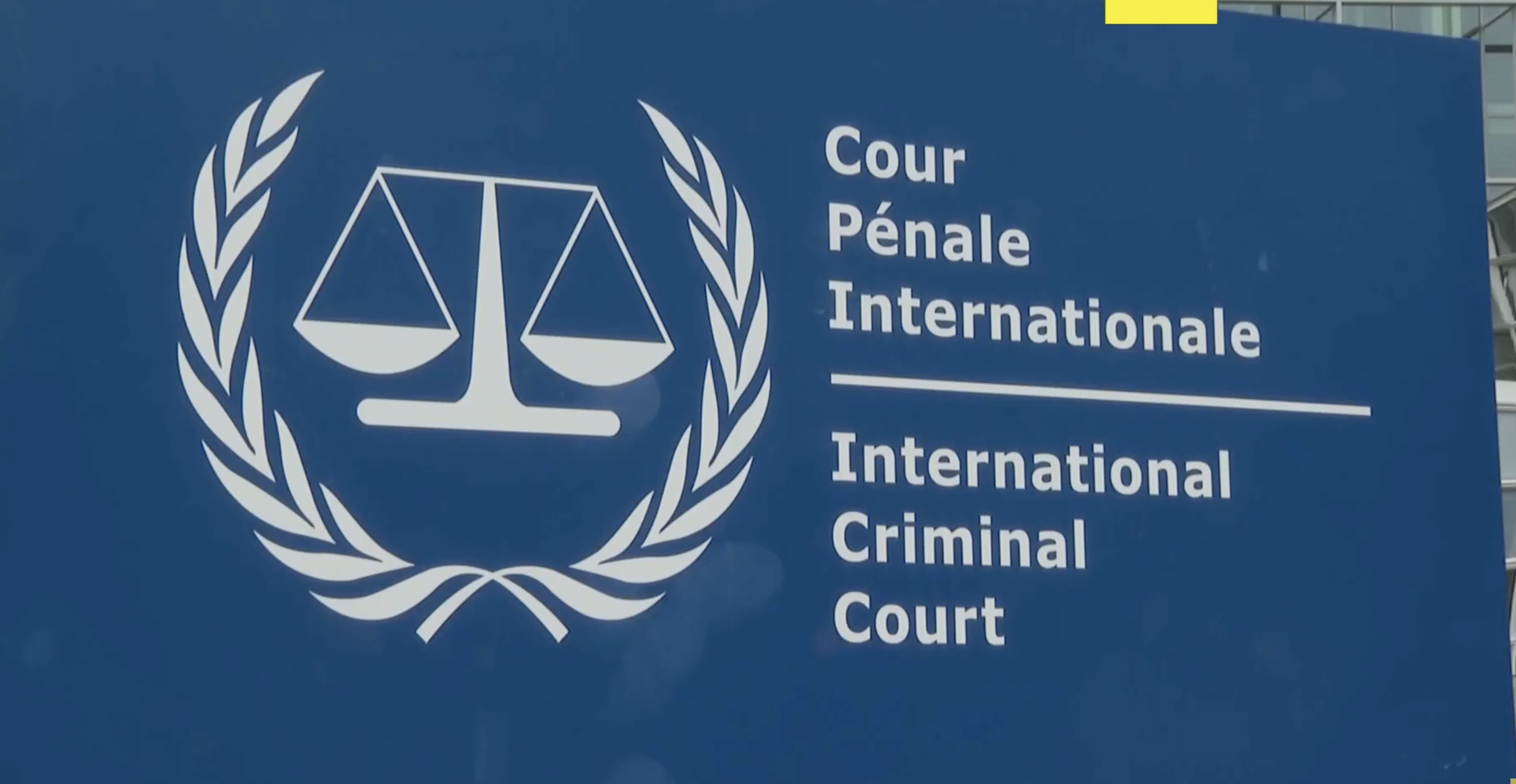
Regarding the Security Council meeting on Libya
Adala for All association followed with great interest the proceedings of the UN Security Council meeting held on 15 May 2025 to review the 29th report of the Office of the Prosecutor of the International Criminal Court on the situation in Libya. The organisation expresses its full support for all efforts aimed at achieving justice and accountabilityand end impunity in Libya, which has suffered for more than a decade from the consequences of conflict and political division, as well as serious crimes against civilians, migrants, activists and human rights defenders.
Recommendations:
1. Adala for All calls on the Human Rights Council to establish an international commission of inquiry during its next session (June 2025) to document human rights violations and breaches of international humanitarian law in Libya, and to ensure that evidence is preserved and submitted to competent judicial authorities, whether local or international.
2. The organisation calls on the International Criminal Court to continue its investigations effectively and urges the international community to respect and implement the arrest warrants.
3. AFA calls on European countries to open judicial investigations under the principle of universal jurisdiction against those involved in violations who are present on their territory.
Justice does not lapse with the passage of time,and peace cannot be achieved in Libya without genuine accountability
Supporting accountability and strengthening judicial cooperation
Adala for All followed up on the announcement by the Office of the Prosecutor of the International Criminal Court regarding progress made in the four priority cases, particularly with regard to investigations into detention centres, mass graves in Tarhuna, and violations against migrants. It also considers the Libyan authorities' announcement of their acceptance of the Court's jurisdiction for the period from 2011 to 2027 to be an important development that contributes to strengthening the path to justice and accountability.
The organisation stresses the importance of respecting the relevant Security Council resolutions and the commitment of the Libyan authorities to cooperate fully with the International Criminal Court, including by arresting and surrendering persons wanted by the Court. It urges UN member states to implement the arrest warrants and ensure that perpetrators do not escape accountability.
Empowering the Libyan judiciary
While appreciating the role of the International Criminal Court, Justice for All affirms that sustainable justice cannot be achieved without empowering the Libyan judiciary. Justice for All therefore calls for concrete steps in this direction, most notably:
· Empowering the Public Prosecutor's Office to perform its role in monitoring detention centres and executing summonses and release orders, without interference from the security services.
· Respecting the independence of the judiciary and ensuring the safety of judges and prosecutors from any threats or reprisals.
· Providing resources and services to the courts and strengthening the financial and administrative independence of the judiciary, in order to ensure the effective separation of powers.
In this context, the organisation stresses the need to review the current legal framework to prevent civilians from being tried before military courts and to ensure that they are brought before their natural judge, the civil judiciary, even in cases where special provisions apply, such as the Anti-Terrorism Law, in compliance with international fair trial standards.
The organisation notes that Libyan law already contains a clear classification of detainees, but that there are fundamental flaws in the application of this classification on the ground, where different categories of detainees are held together without regard for the rules of legal separation. The organisation recommends that this classification be implemented in practice, supervised by the judiciary, and that the prison law be reviewed to strengthen fair trial guarantees, reduce prolonged pretrial detention and enable civil society organisations to visit detention centres on a regular basis.
The Supreme Judicial Council should form a committee to examine the files of all those accused of extrajudicial killings or reprisals, taking into account previous complaints. In addition, those suspected of war crimes should be investigated to determine whether prosecution is warranted.
Holding perpetrators accountable and providing justice to victims is not a political choice, but a legal and moral obligation that must be shared by all. AFA believes that justice in Libya cannot be achieved through international decisions alone, but rather through the empowerment of its judicial institutions, the reform of its security structures, and the establishment of a genuine partnership with the international community based on respect for sovereignty and the principle of judicial integrity.
Ensuring the protection and independence of the Libyan judiciary
Judges, prosecutors and lawyers in Libya are often subjected to physical violence and arbitrary arrests, which undermine their safety and independence.
The following is a chronological list of incidents, with names preceding dates, arranged from oldest to most recent:
A. Judges and prosecutors
1. Hamza Muhammad Saqr – Abducted by the Al-Kaniyat militia on 5 December 2017, his body was found in a mass grave in Tarhuna in June 2021.Ahmad Isa Hussein – Shot in the Shat district at dawn on 16 November 2020.
2. Mohammed bin Amer – Kidnapped in the Qarabulli Palace in the Tripoli district on 27 February 2020, his body was found in the Tarhuna cemetery in June 2023.
3. Diaa al-Haq Abdul Hafiz – Assassination attempt on 20 October 2021, resulting in him being shot several times.
4. Salem Abdul Aziz al-Warfali – Assassinated on 25 November 2021, he was an officer at the Court of First Instance in South Benghazi.
5. Judges and prosecutors of the Sabha Court of Appeal – attacked by an armed group on 25 November 2021.
6. Mansour Dube – arbitrarily arrested on 29 May 2022, he was the deputy public prosecutor for counter-terrorism in Tripoli.
7. Delegation of the Supreme Judicial Council – subjected to attempted kidnapping and intimidation in Benghazi while attending a session of the House of Representatives on 13 December 2023.
8. Ahmed al-Qatani – assaulted by a military group at the South Benghazi Court of First Instance on 13 June 2024.
9. Abdul Jawad Al-Alous – Attempted assassination on 21 October 2024 in Al-Khums, where dozens of live rounds were fired at his home.
10. Ali Al-Saghir Al-Sharif – Assaulted at his home in Tripoli on 10 March 2025, where he was insulted, beaten and illegally detained before being released.
B. Lawyers
1. Hanin al-Barassi – Assassinated by armed individuals on 10 November 2020 in Benghazi.
2. Ahmed al-Siddiq al-Sabihi – Arbitrarily arrested on 21 October 2021 by the judicial police at the Public Prosecutor's Office in South Benghazi.
3. Abdullah Farhat – Physically assaulted at the Tripoli court on 18 July 2022.
4. Abdulhakim Magour – Arbitrarily arrested on 26 March 2024.
5. Munir Al-Abed – arbitrarily arrested on 13 March 2025 in Benghazi by armed men from the Internal Security Agency and taken to their headquarters in Sidi Hussein without legal proceedings.
Reform of security institutions
Adala for All renews its call on the United Nations Mission and the Libyan authorities to implement the recommendations of the Libyan Platform for Human Rights since 2019, including the formation of a specialised technical committee with the support of local and international experts to restructure the security sector, review its internal laws, define the chain of command, developing internal complaint systems, and establishing mechanisms to integrate armed elements into transitional justice processes in the form of a general and abstract roadmap, in order to:
1. Define the mandates of the Ministries of Interior and Defence;
2. Define the departments, chain of command and responsibilities within each ministry;
3. Define the mechanism for participation, the time frame and the content of training;
4. Develop an internal complaints system (including a mechanism for citizens to file complaints against members of the two ministries and a mechanism for members of the security sector to file complaints against their superiors);
5. Draft a legal framework regulating the work of trade unions within the security sectors.
6. Draft a law to develop a plan for the reintegration of individuals after their demobilisation and disarmament, and the rehabilitation of members of current militias and armed groups, within the framework of reconciliation and transitional justice legislation.
ADALA FOR ALL