Organizations warn of the collapse of fair trial guarantees and condemn the targeting of lawyers and judges and Tunisia’s withdrawal of its declaration accepting the jurisdiction of the African Court
Setback to the Rule of Law and Human Rights in Tunisia
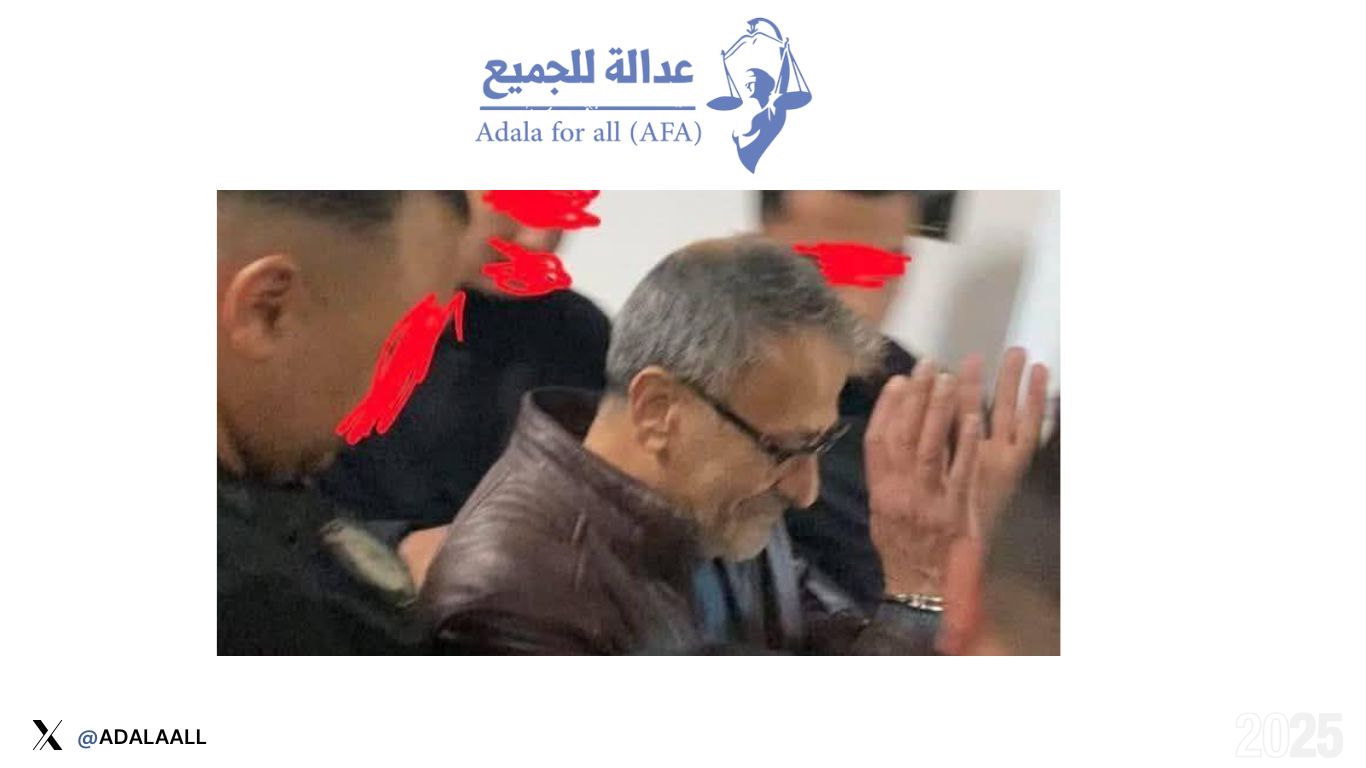
Tunis, 24 April 202 -The undersigned organizations express their grave concern about the setback to the rule of law and human rights in Tunisia, amid systematic targeting of political opponents, lawyers, and human rights defenders. On 21 April 2025, defense team lawyer *Ahmed Sawab was arrested, after criticizing the trial for “conspiring against state security.” On 19 April 2025, 41 individuals, including political opposition leaders, lawyers, and businesspersons, were sentenced to prison terms ranging from 4 to 66 years.
These violations come within a broader context of a dangerous escalation in the use of state agencies and the judiciary to suppress voices. Tunisian authorities disregard international standards, including the rulings of the African Court on Human and Peoples’ Rights. On 3 March 2025, Tunisia withdrew from the Protocol to the African Charter on Human and Peoples’ Rights. This process began with President Kais Saied’s seizure of all powers on 25 July 2021.
Arrests of lawyers and obstruction of access to justice
The undersigned organizations consider the arrest of lawyer and former judge Ahmed Sawab on 21 April 2025, to be part of a systematic policy targeting lawyers based on their professional and human rights activities, in flagrant violation of the UN Basic Principles on the Role of Lawyers.
The arrest of Sawab, a prominent member of the defense team in the “conspiracy” case, came after he published a video in which he criticized the pressures placed on judges, pointing to threatening files against them, a clear expression of the violation of the independence of the judiciary. Sawab was taken from his home by the National Unit for the Investigation of Terrorism and Organized Crimes Threatening National Territory in Bouchoucha. Sawab’s office was raided, his son Saeb Sawab was interrogated for several hours, and his family members’ phones were confiscated.
The undersigned organizations note that Professor Ahmed Sawab’s arrest is not an isolated case, but rather part of a pattern targeting lawyers in Tunisia, both for their work defending defendants in the “conspiracy against state security” case, and for their critical stances toward authorities. On 11 May 2024, Lawyer Sonia Dahmani was arrested, following a raid on the headquarters of the Bar Association. Dahmani was subsequently sentenced to one year in prison under Decree No. 54 of 2022, in violation of Article 19 of the International Covenant on Civil and Political Rights and Principle 16 of the UN Principles on the Role of Lawyers.
On 13 May 2024, Lawyer Mehdi Zagrouba was forcibly arrested and bore documented signs of torture, and no independent investigation was opened, as required by Article 12 of the Convention against Torture. Lawyers Ghazi Chaouachi and Ridha Belhaj have remained in detention since February 2023, after refusing to participate in remote trial sessions in protest against procedural violations. Lawyer Noureddine Bhiri, a member of the defense team and former Minister of Justice, was sentenced to 43 years in prison in a trial that lacked fair trial conditions, in violation of Principle 18 of the UN Principles on the Role of Lawyers, which prohibits the punishment of lawyers for their political or professional opinions.
This targeting reaches beyond detained lawyers and includes those placed in exile or under surveillance. Lawyer and human rights activist Bochra Belhaj Hmida left the country in March 2023, after being falsely accused of “forming a terrorist group and conspiring against the country’s security” (17 charges). Lawyer Lazhar Akremi has been under judicial restrictions since his conditional release in July 2023. Lawyer Ayachi Hammami faced investigations in May 2023 for defending opposition leaders and was sentenced to eight years in prison. Lawyer Dalila Msadek faced threats for her statements rejecting the rulings in the case.
Systematic pressure on judges and undermining judicial independence
- On 6 February 2022, the Supreme Judicial Council was dissolved, in direct violation of the constitutional principle of separation of powers (Article 16 of the International Covenant on Civil and Political Rights).
- Arbitrary transfer of at least 45 judges between 2022 and 2024.
- More than 600 complaints were filed against judges and lawyers with the intent to pressure them.
- Interference in the process of more than 125 court cases. All of this data documents the collapse of fair trial guarantees and indicates a systematic disruption of the justice system, constituting a direct obstruction of the right to access to justice, which international conventions enshrine as a fundamental and inviolable right.
Since President Kais Saied seized full powers on 25 July 2021, Tunisia has faced systematic dismantling of the judicial system. This process witnessed a series of measures undermining the independence of the judiciary and threatening the fundamental right to a fair trial, a right guaranteed by Article 14 of the International Covenant on Civil and Political Rights. These measures have eroded the independence of the judiciary, jeopardizing the rule of law and limiting citizens’ ability to access justice.
The first of these measures was the dissolution of the Supreme Judicial Council on 6 February 2022, pursuant to Decree No. 11 of 2022, in a clear violation of the principle of separation of powers enshrined in Article 16 of the International Covenant on Civil and Political Rights, as well as Article 114 of the 2014 Tunisian Constitution, which guarantees the independence of the judiciary. This dissolution placed the judiciary under the control of the executive branch, as the Council was replaced by a temporary body subordinate to the president, violating Article 1 of the Basic Principles on the Independence of the Judiciary (United Nations 1985), which prohibits any interference in judicial affairs. The judiciary lost its role as a guarantor of rights and freedoms and became a tool of political repression, as demonstrated by the “conspiracy against state security” case, in which lawyers Ghazi Chaouachi and Ridha Belhaj were convicted to 18 years in prison on 19 April 2025.
These arbitrary measures further included the transfer of at least 45 judges between 2022 and 2024 without clear legal justification or respect for procedural guarantees, the filing of more than 600 complaints against judges and lawyers with the intent of intimidating them, and direct interference in more than 125 court cases, according to a statement by the Tunisian Judges Association on 17 August [CB1] 2025. These measures undermined the impartiality and independence of the judiciary, making judges vulnerable to political pressure and threats, limiting their ability to adjudicate cases fairly and depriving citizens of the right to a fair trial. Furthermore, targeting of lawyers, as witnessed by Sonia Dahmani and Mehdi Zagrouba, hinders their role in defending rights, exacerbating the crisis of access to justice and fostering a climate of impunity.
Violation of the principle of procedural legality
Adala for All Association records a clear violation of the principle of procedural legality, which is one of the fundamental guarantees of any fair trial. This principle is based on respect for clear, written, and previously known procedural rules, applied without discrimination or exception. This principle is stipulated in Article 14 of the International Covenant on Civil and Political Rights and is enshrined in the United Nations Basic Principles on the Independence of the Judiciary.
Since 2021, the judicial reality in Tunisia demonstrates a sharp decline in this principle, through:
• Trials before exceptional bodies, and pursuant to decrees not subject to any constitutional oversight
• The absence of established standards in disciplinary procedures or judicial prosecutions against judges and lawyers
• Violation of the rights of defense and preliminary proceedings, through detention without legal warrants, or without enabling the accused to review their file or effectively plead
These practices constitute a systematic violation of the principle of procedural legality and transform the judiciary from a legal institution into a political tool, undermining public confidence in it.
The authorities’ tendency to evade their international obligations and Tunisia’s withdrawal of its declaration accepting the jurisdiction of the African Court on Human and Peoples’ Rights
On 20 March 2025, Tunisia officially announced the withdrawal of its declaration accepting the jurisdiction of the African Court on Human and Peoples’ Rights. The court has received petitions from individuals and non-governmental organizations, confirming the authorities' tendency to evade their international obligations and deprive citizens of external remedies in the absence of domestic redress. This follows the court’s decision in June 2022 to suspend the implementation of Presidential Decree No. 35 of 2022, which allowed the exceptional dismissal of judges without guarantees. The Tunisian authorities’ actions were deemed unconstitutional, and the court ordered a return to the 2014 Constitution and the annulment of several presidential decrees.
Absence of the Constitutional Court: An institutional void deepens the crisis of justice
The undersigned organizations recall that, despite more than a decade having passed since the adoption of the 2014 Constitution, Tunisia has yet to establish a Constitutional Court. This constitutes a flagrant violation of the provisions of Article 118 of the Tunisian Constitution, 2014 version, which explicitly stipulates that the court must be established within a period not exceeding one year from the date of the first legislative elections.
This institutional void has been exacerbated since the declaration of exceptional measures on 25 July 2021, and with the adoption of the 2022 Constitution under controversial circumstances. There was no independent mechanism capable of monitoring the constitutionality of laws or limiting the executive branch’s arrogance, especially amid the unprecedented concentration of power in the hands of the President of the Republic.
The absence of a Constitutional Court deprives citizens of a fundamental means of challenging the constitutionality of laws and decrees that infringe upon their rights, and further weakens oversight of the government, leading to the legitimization of violations and perpetuating a climate of impunity for legal and political abuses.
Thus, the organizations affirm that the failure to establish a Constitutional Court leads to:
- Contradicting the principle of the rule of law as stipulated in the International Covenant on Civil and Political Rights, particularly Articles 2 and 14 relating to the right to litigation and judicial guarantees.
- Weakening the system of national guarantees at a time when Tunisia has withdrawn from the jurisdiction of the African Court on Human and Peoples’ Rights (decision of 3 March 2025), thus increasing the vulnerability of citizens to abuses and violations without effective means of redress.
- Consolidating a dangerous reality of constitutional vacuum, with no independent body capable of adjudicating constitutional disputes and assessing the extent to which legislation respects fundamental rights and freedoms.
Obstruction of access to justice in Tunisia: A systematic policy
Through arrests, pressure on lawyers and judges, and Tunisia's withdrawal from regional judicial mechanisms, Adala for All notes that the current authorities are implementing a systematic policy to obstruct access to justice, which violates:
• Article 2 of the International Covenant on Civil and Political Rights (the right to an effective remedy).
• Article 8 of the Universal Declaration of Human Rights (the right to access to justice).
• The United Nations Principles on the Independence of the Judiciary.
The signatories are deeply concerned with the practices of Tunisian authorities since the declaration of exceptional measures on 25 July 2021. These practices are moving toward a systematic policy of obstructing access to justice through three main and interconnected means:
1. Targeting lawyers through arbitrary arrests and prosecutions, which constitutes direct intimidation of the defense team and undermines the role of lawyers as guarantors of individual rights and as a fundamental link between citizens and the justice system
2. Undermining the independence of the judiciary through executive interference in appointments and dismissals, in addition to exceptional decrees, most notably Decree 35 of 2022, which undermines citizens’ confidence in the integrity of the judiciary
3. Tunisia’s withdrawal from regional judicial mechanisms, particularly its decision of 3 March 2025, to withdraw recognition of the jurisdiction of the African Court on Human and Peoples’ Rights, which excludes Tunisian citizens from their right to resort to international justice in the event of domestic denial of justice
These practices constitute a clear violation of several international obligations ratified by the Republic of Tunisia, most notably:
- Article 2 of the International Covenant on Civil and Political Rights (1966), which obligates States Parties to “ensure that any person whose rights or freedoms as herein recognized are violated shall have an effective remedy,” and to provide such remedies through independent and competent judicial authorities.
- Article 8 of the Universal Declaration of Human Rights (1948), which stipulates “Everyone has the right to an effective remedy by the competent national tribunals for acts violating the fundamental rights granted him by the constitution or by law.” This makes obstructing or undermining judicial mechanisms a direct violation of this provision.
- The United Nations Basic Principles on the Independence of the Judiciary (1985), which emphasize the need for the state to guarantee the independence of the judiciary against all forms of pressure or interference, whether from the executive or other authorities.
Recommendations of the signatory organizations:
Based on their mission to defend the right to access to justice, the signatory organizations recommend the following:
1. The immediate and unconditional release of all detained lawyers and opposition figures, most notably Ahmed Sawab, Sonia Dahmani, Ghazi Chaouachi, Ridha Belhaj, Ayachi Hammami, Lazhar Akremi, and Bochra Belhaj Hmida, and the dropping of malicious charges against them.
2. The abolition of all arbitrary judicial prosecutions in opinion-related cases, and the cessation of the policy of intimidation and terrorization targeting lawyers and judges on the basis of their positions, professional activities, or defense of fundamental rights.
3. To resume judicial cooperation with the African Court on Human and Peoples’ Rights by withdrawing the withdrawal declaration dated 3 March 2025, and fully complying with the Court’s rulings, particularly the ruling issued on 22 September 2022, regarding the return to constitutional order, and the ruling issued on October 2024 regarding the suspension of Decree No. 35 of 2022.
4. To reinstate the 2014 Constitution as the sole framework guaranteeing the separation of powers, judicial independence, and the protection of constitutionally guaranteed rights and freedoms.
5. To establish an independent and pluralistic Constitutional Court in accordance with the provisions of Article 118 of the 2014 Constitution, to guarantee effective oversight of the constitutionality of laws and decrees, enshrine the rule of law, and strengthen constitutional protection of human rights.
6. To ensure respect for international fair trial standards, as stipulated in the International Covenant on Civil and Political Rights, particularly Article 14, and provide all judicial guarantees to detainees and accused persons, without political interference or pressure.
7. The implementation of the international commitments ratified by Tunisia under regional and international human rights conventions, including the African Charter on Human and Peoples’ Rights and the United Nations Principles on the Independence of the Judiciary and the Role of Lawyers (1985 and 1990).
Signatories:
- ADALA FOR ALL Association
- Intersection Association for rights and freedoms
___
Lawyer and former judge *Ahmed Souab was arrested and held under the provisions of Organic Law No. 26 of 2015, dated August 7, 2015, relating to the fight against terrorism.
He was charged with several offenses, including forming an agreement with the intent to commit terrorist acts, and providing means such as websites, documents, and photographs of leaders and members of terrorist organizations linked to terrorist crimes — notably ISIS and Al-Qaeda — in favor of individuals already subject to legal proceedings.
Other charges were also brought against him under Articles 13 (new), 13 bis, 30, 32, 34, 37, 40, 71, and 78 of Law No. 26 of 2015 on combating terrorism and preventing money laundering, as amended by Organic Law No. 9 of 2019, dated January 23, 2019.
In addition, he was charged under Articles 32 and 222 of the Criminal Code, Article 86 of the Telecommunications Code, and Article 24 of Decree No. 54.